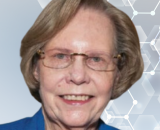
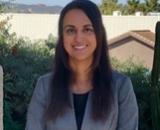
The brightest stars visible in the sky are often those closest to us. That’s an apt way to describe ARCS member Sandra Matteucci, who has been honored with the inaugural “Luminary Award.” Presented at the National ARCS board meeting in early June, the award recognizes Matteucci’s exceptional service to the National...
Virtual and augmented reality are more than tools for a fun video game experience. This revolutionary technology is now used for training in medical fields and workforces. But there’s only one problem: about fifty percent of the world’s population gets motion sickness. Women who use VR are more prone to motion...
Summer reading should include science and technology topics. Here are a few suggestions, but we encourage you to share your recommendations with the larger ARCS community. Tell us the title, author, and brief input on why you suggest it. Email your recommendation to newsletter@arcsfoundation.org
Butterflies are more beautiful and unique than we know. Sofia Sheikh, an ARCS Illinois Scholar, knows this firsthand and it’s why she studies them for her PhD in ecology and evolution.
At the University of Chicago, Sheikh performs genetic manipulations on butterflies as she hunts for the reasoning behind gene co-option...
Saliva is the key to digestion. It moistens the mouth and protects the gums and teeth. Perhaps the most interesting thing it does, however, is contain the essence of a person’s genetics. Paul Maier, a population geneticist at FamilyTreeDNA and former ARCS San Diego Scholar, says a small sample of saliva...
Advances in science are personal to ARCS member Linda Burke. She has learned firsthand since second grade that unless a hearing problem is correctly identified, you can’t fix it. But years later, when you can finally hear on a more normal level, medical and technological advances are “pretty amazing.”
If you are planting your vegetable garden this month, your goal may be enough tomatoes for a yummy sauce, or extra beans to freeze. But the scientists at Inari, based in Massachusetts, think more globally about seeds. ARCS Scholar alumna Kali Brandt, a scientist in plant cell biology at Inari...
“If you can’t smell anything, that’s the best” is a saying that circulates the atmospheric science community. Coty Jen, ARCS Minnesota Chapter Scholar Alumni and current professor at Carnegie Mellon University, joined this community once she chose to use her degrees in chemical and mechanical engineering to study atmospheric particles. What...
Professor Donald Falk became interested in fire “because I saw fire as a big, powerful, scary process. If we get that wrong, we end up with a lot of degraded habitats,” he explains. His career started with studying rare plant species but has evolved to a focus on ecosystem conditions, drought...
ARCS Scholar Alumni Shadi Sami is the Principal Civil Engineer for the largest capital improvement program in the City of Poway, CA. – a $70-million water improvement program. The decision and commitment to upgrade the system and bring it up to today’s industry standards “is a big deal for Poway,” Sami...